

 Nur Aimah Auliya Aprilianingrum
 Coconut Charcoal Quality Specifications Guide
Understanding coconut charcoal quality specifications is essential for business owners and consumers who rely on high-quality coconut shell charcoal. Quality specifications determine burning performance, durability, and product safety. Therefore, knowing these standards helps buyers choose the most suitable charcoal products.
Moreover, global markets increasingly demand charcoal products with consistent quality. By understanding product specifications, business owners can improve competitiveness and maintain customer trust.
Importance of Coconut Charcoal Quality Specifications
Coconut charcoal quality specifications serve as benchmarks to determine product quality. These standards usually include moisture content, ash content, density level, and burning duration. By following these specifications, manufacturers can produce stable and efficient charcoal products.
Furthermore, quality specifications ensure that charcoal products remain safe for various applications. Because of this, many business owners rely on quality standards before purchasing coconut charcoal products.
Coconut Charcoal Product Types and Specifications
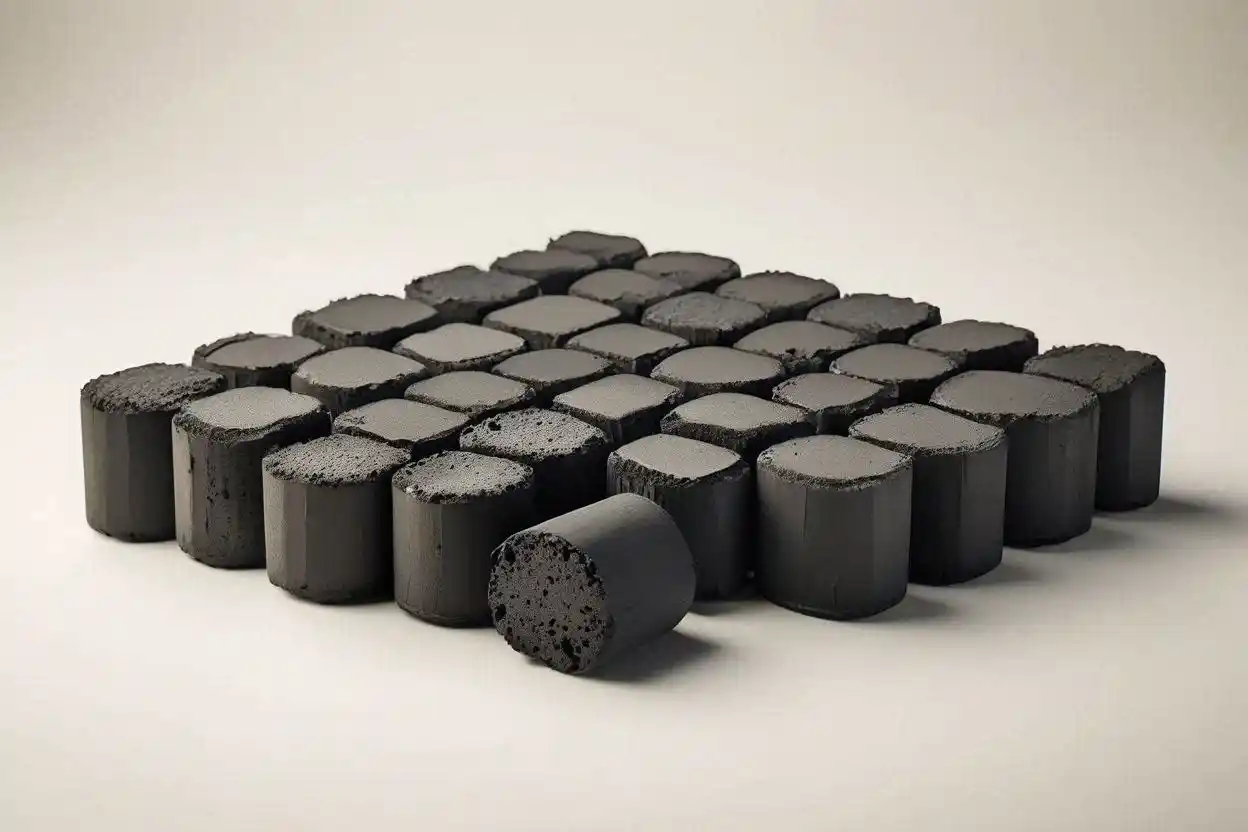
Coconut charcoal products are available in several types that match different usage needs. Each type has unique designs and functions that influence burning performance. Consequently, users can select products that fit their specific purposes.
Common product types include:
-
Hexagonal briquettes for shisha
-
Cube briquettes for barbeque
-
Pillow briquettes for general purposes
Each type offers different combustion characteristics. Therefore, selecting the right product type depends on its intended function.
Coconut Charcoal Materials and Production Specifications
The main material for coconut charcoal comes from high-quality coconut shells. Manufacturers carefully select raw materials with low moisture levels to produce dense and durable charcoal. Additionally, proper material selection improves burning efficiency.
The production process generally involves several important stages, including:
-
Carbonizing coconut shells
-
Grinding charcoal into powder
-
Mixing with natural binders
-
Pressing and drying briquettes
Through these processes, charcoal products generate stable heat and minimal ash residue. As a result, the product meets international market quality requirements.
Coconut Charcoal Quality Specification Parameters
Several important indicators define coconut charcoal quality specifications. These parameters help manufacturers and buyers evaluate product quality objectively. Additionally, these quality indicators influence product market value.
Key quality indicators include:
-
Low moisture content
-
Minimal ash content
-
High density level
-
Long burning duration
-
Stable heat performance
By meeting these parameters, charcoal products deliver maximum efficiency for users. Therefore, many businesses prefer working with a hardwood and coconut charcoal supplier that consistently maintains high product standards.
Business Benefits of Coconut Charcoal Quality Standards
Quality standards provide several advantages for business owners. First, consistent product quality helps improve customer satisfaction. Second, strong quality control helps maintain long-term business reputation.
Additionally, business owners can gain further industry insights through references such as endleskingdom.com. The platform offers informative blogs discussing charcoal-based products and potential business opportunities.
By using reliable information sources, entrepreneurs can improve marketing strategies and enhance product development. Consequently, understanding quality specifications becomes a crucial element in coconut charcoal business growth.
Impact on Consumers
Quality specifications benefit not only manufacturers but also consumers. High-standard charcoal products produce cleaner and more efficient combustion. Furthermore, consumers can reduce fuel consumption because high-quality charcoal burns longer.
As a result, consumers enjoy better performance and convenience during use. This advantage significantly increases demand for premium coconut charcoal products in the global market.
Conclusion
Work uniforms provide significant benefits for companies by strengthening corporate identity and improving employee professionalism. In addition, uniforms create consistent company branding that enhances customer trust and recognition. Furthermore, work uniforms promote teamwork, discipline, and equality among employees, which ultimately supports productivity and strengthens overall company credibility.

0