

 Nur Aimah Auliya Aprilianingrum
 Hardwood and Coconut Charcoal Supplier for Business
The demand for hardwood and coconut charcoal continues to increase along with the growing culinary and alternative energy industries. Choosing the right hardwood and coconut charcoal supplier becomes the key to success for businesses that rely on quality fuel supplies. Both types of charcoal offer unique characteristics suitable for various commercial applications.
Product quality, supply consistency, and competitive pricing become the main considerations in selecting suppliers. Therefore, understanding the differences and advantages of each type of charcoal will help you make more strategic business decisions.
Hardwood and Coconut Charcoal Key Differences
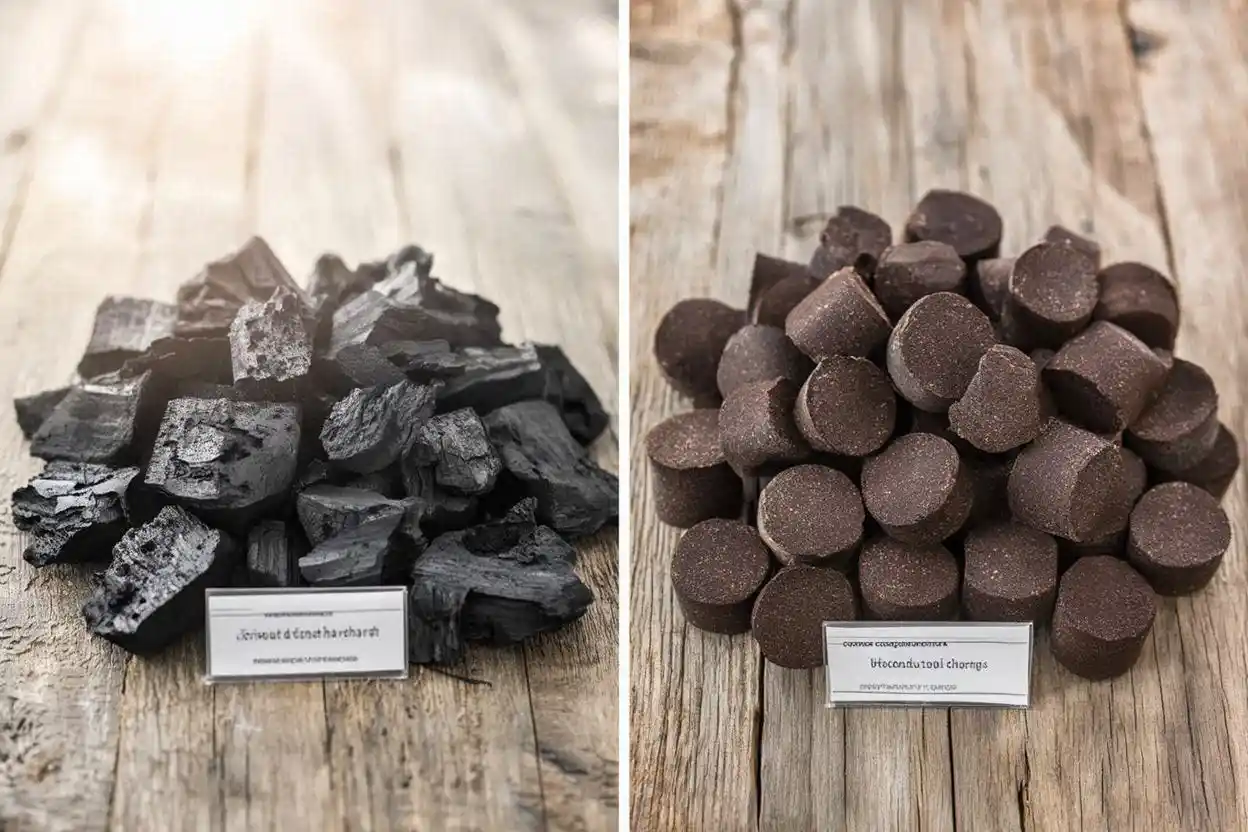
Hardwood charcoal comes from hardwood trees such as teak, rosewood, or acacia that produce high-quality carbon. Its burning process generates very high and long-lasting heat, ideal for metallurgy industries and premium restaurants.
Meanwhile, coconut charcoal producers make their product from coconut shells that are abundant in Indonesia. This product produces cleaner burning with minimal smoke, very suitable for shisha applications, barbecue, and household purposes.
Both types of charcoal have different but equally profitable markets. Professional suppliers usually provide both variants to meet diverse client needs.
Benefits of Trusted Charcoal Supplier Partnership
Partnering with a trusted hardwood and coconut charcoal supplier provides many competitive advantages for your business. Professional suppliers guarantee consistent product quality through strict quality control at every production stage.
Additionally, they offer flexibility in ordering with minimum orders adjusted to business needs. This greatly helps especially for medium-scale business owners who are just developing.
Several main advantages include:
- Stable product quality with international export standards
- Large production capacity to fulfill routine orders
- Organized delivery system with clear tracking
- Competitive prices for bulk purchases
- Product consultation services according to application needs
Furthermore, experienced suppliers also have the necessary certifications for export. This becomes very important if you plan distribution to international markets that have strict regulations.
Industrial Applications of Hardwood Coconut Charcoal
Hardwood and coconut charcoal supplier serves various market segments with specific needs. In the culinary sector, steakhouses and barbecue restaurants choose hardwood charcoal because it produces stable high heat for cooking premium quality meat.
Meanwhile, the shisha and hookah industry prefers coconut charcoal because it does not alter the taste and produces minimal smoke. Hotels and resorts also often use a combination of both types of charcoal for their outdoor dining purposes.
For more complete information about the charcoal industry and other educational articles, you can visit jacoid.com which provides various quality references.
Selecting Quality Hardwood Coconut Charcoal Supplier
Selecting the right supplier requires thorough evaluation of several important aspects. First, check the track record and reputation of suppliers through testimonials from previous clients and how long they have operated in this industry.
Next, ensure the supplier has adequate production facilities and uses modern technology. Efficient production processes produce better product quality at prices that remain competitive.
Working with a coconut charcoal briquette supplier that also provides hardwood variants gives you the advantage of a one-stop solution for your charcoal needs. This simplifies the procurement process and facilitates delivery coordination.
Conclusion
Choosing the right hardwood and coconut charcoal supplier represents a strategic investment for long-term business sustainability. Quality suppliers not only provide the best products but also become partners that support business growth through quality consistency and responsive professional services.
By conducting thorough research about reputation, production capacity, quality standards, and supplier distribution systems, you can build a solid business foundation. Strong partnerships with trusted suppliers will provide competitive advantages in increasingly dynamic markets, while ensuring quality fuel supplies for your business operations sustainably.

0